

Fight or flight
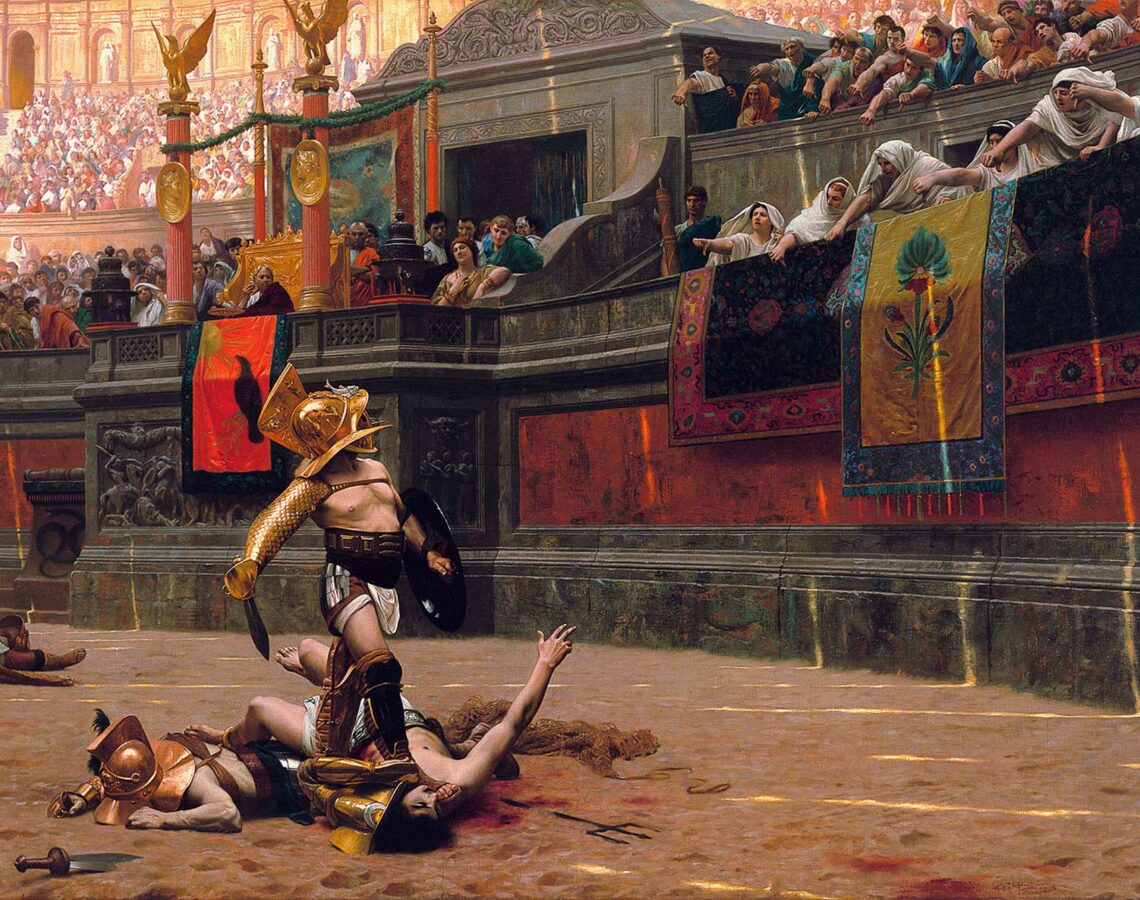
Title: Fight or flight
Subtitle: Stories from the Mediterranean arenas
Number of episodes: 4 – 6
Duration of an episode: 45 – 50 minutes
Summary
This documentary series explores spectacles and the machinery of death and entertainment that unfolded in the arenas of the Roman Mediterranean. While many familiar portrayals emphasize the grandeur of the Colosseum and the myth of the Roman gladiator, Fight or Flight offers a different perspective. It travels beyond Rome to the eastern provinces of the Empire, telling stories from both sides of the arena: those who fought and those who watched.
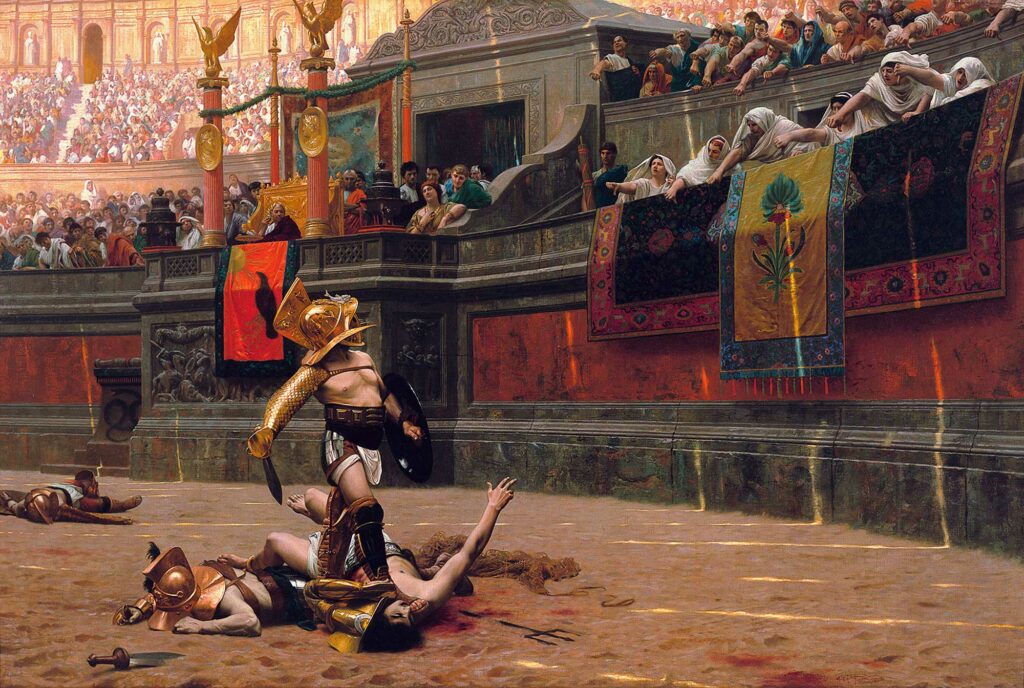
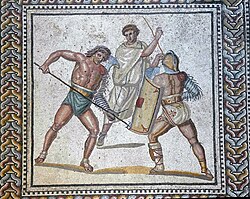
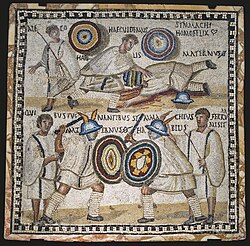
The first lens focuses on the protagonists of the arena. Viewers will encounter not only celebrated gladiators but also the often-overlooked figures who shared the arena with them: wild animals, prisoners of war awaiting execution, and other marginalised figures whose fates stirred ancient emotions. Their experiences are reconstructed through archaeological evidence and the voices of literary sources, revealing lives marked by courage, fear, pride and resilience.


The series also turns its lens on the spectators. What did they feel? What moved them—empathy, thrill, disgust, delight? Why was violent spectacle so central to public life? Fight or Flight invites modern viewers to reconsider the Roman arena not just as a site of violence, but as a mirror of its society: complex, conflicted, and deeply human.


Who is who

Eleni Fassa (Script & Presentation)
Assistant Professor of Hellenistic and Roman History at the Department of History and Ethnology, Democritus University of Thrace. Eleni is fluent in English, making her an ideal presenter for international audiences.
Born in Athens, she completed her undergraduate studies in Classical Philology at the University of Athens. She pursued a PhD in History from the Department of History and Archaeology at the same university, and also holds an MA in Ancient Drama and Society from the Department of Classics and Ancient History, University of Exeter.
From 2017 to 2019, she served as a principal researcher in the research project “The Gods of Egypt in Macedonia: Religious experience of alterity and assimilation strategies in Greco-Roman times,” funded by IKY-ESPA, at the National Hellenic Research Foundation.
Her research focuses on the religious and cultural history of the Hellenistic and Greco-Roman East, covering the period from the late 4th century BCE to late antiquity. She is particularly interested in the establishment and development of the cults of Isiac and other “Eastern” deities in the Mediterranean, the cultic history of Macedonia, and the processes of integrating gods perceived as “foreign” into the traditional Greek world. Her research interests also include documenting the private individual’s religious experience as a shaper of cultic reality and the formation of intellectual communities in later Hellenism.
She has published numerous articles in international academic journals and collective volumes focusing on the cults of the Greco-Roman world. Her publications include “The Letters of Julian the Syrian” (introduction, translation, commentary, Stigmi Publications, Athens 2016) and the study “The Genesis of a Cult: Sarapis and the Ptolemies in 3rd Century BCE Alexandria.” In 2022, her book “Bread and Circuses: Violence and Entertainment in Greco-Roman Cities” was released.
Why invest in this documentary series
- Tackles aspects of gladiators and ancient spectacle that have rarely, if ever, been explored on screen
- Combines rigorous scholarship with accessible storytelling – appealing to both general and more informed audiences
- Offers a fresh perspective by shifting the focus away from iconic venues like the Colosseum
- Highlights overlooked dimensions of Roman spectacles, especially in the eastern provinces of the Roman Empire
- Engages with timeless, thought-provoking themes: Why are humans drawn to violence as entertainment?
- Offers compelling visuals – from ancient amphitheaters in the eastern Mediterranean to evocative reconstructions of life and death in the arena
- Designed with cinematic storytelling in mind: archaeological evidence, ancient texts, and expert insights come together in visually striking narratives.


