A High-End Science & Investigative Docuseries | 5 Episodes 45–50 Minutes
The Bones That Challenged Darwin
When a prehistoric skull found inside a Greek cavern sparked claims of a 700,000-year-old European ancestor, it triggered a Cold War scientific feud. Today, revolutionary ancient DNA extraction and the discovery of a 210,000-year-old Homo sapiens in the Peloponnese reveal that the Aegean was not an isolated evolutionary cradle, but humanity's premier migration gateway into Europe.
«Before Europe was born, the corridor was open.»
For decades, international science television framed the human odyssey around two distinct poles: the East African savannahs (the birthplace of Homo sapiens) and the limestone valleys of Western Europe (the Neanderthal strongholds of France and Spain's Atapuerca). The Aegean and Southeastern Europe were largely treated as a geographic void.
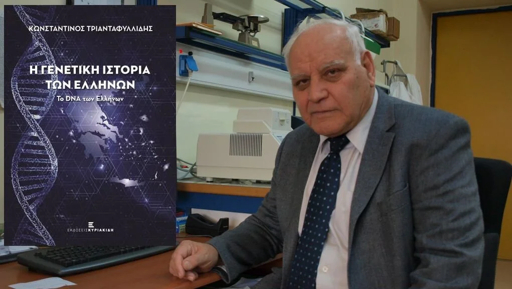
Timed with the official reopening of the newly renovated Petralona Cave and Museum complex, and grounded in the foundational research of Prof. Konstantinos Triantafyllidis (Aristotle University of Thessaloniki) alongside Harvard University's genomic breakthroughs, The Aegean Corridor directly answers five profound scientific questions:
1. The Cold War Autochthony Feud: Why did a Soviet-trained anthropologist (Aris Poulianos) insist that Europe's oldest humans evolved independently in Greece 700,000 years ago, and how did Western radiometric laboratories (Nature, 1981) counter his claims, sparking a high-stakes journal duel in Nature (1982)?
2. The Rewriting of Modern Human Dispersal (Apidima 1): How did the discovery in Southern Greece by Prof. Katerina Harvati prove that modern humans (Homo sapiens) arrived in Europe 210,000 years ago - over 160,000 years earlier than previously accepted - and how does science address ongoing methodological debates regarding the fossil's classification?
3. The Southern Arc Genetic Blueprint: What happens when cranial calipers are replaced by Next-Generation DNA sequencing? How did 727 ancient genomes decoded by Harvard's Reich Lab (Science, 2022) prove that the Mediterranean was forged by dynamic population mixtures (Anatolian farmers, Caucasus hunters, Steppe pastoralists) rather than isolated lineages?
4. Connecting Global Genetics to the Spade (Kastrouli & Mycenae): What does ancient DNA extracted from the fortified Mycenaean settlement of Kastrouli near Delphi and royal Mycenaean tombs reveal about the tangible biological roots of Mediterranean civilizations?
5. Evolution vs. Cultural Identity: In an era of intense cultural debate, how does rigorous empirical science separate deep ancestral population continuity from outdated myths of biological isolation?
Professor Emeritus of Genetics & Human Genetics. The forefather of human population genetics in Greece and author of The Genetic Origin of the Greeks.
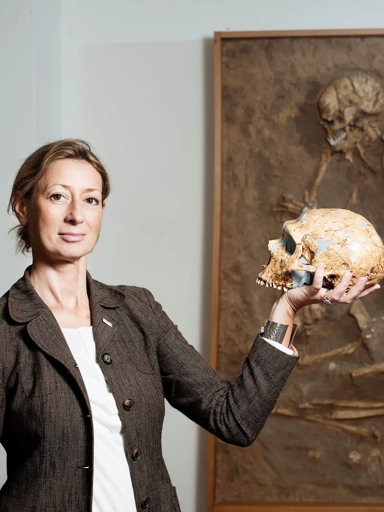
World-renowned Paleoanthropologist; Lead Researcher on the Apidima 1 discovery (Nature, 2019). Featured on-camera detailing virtual fossil reconstruction and migration timelines.
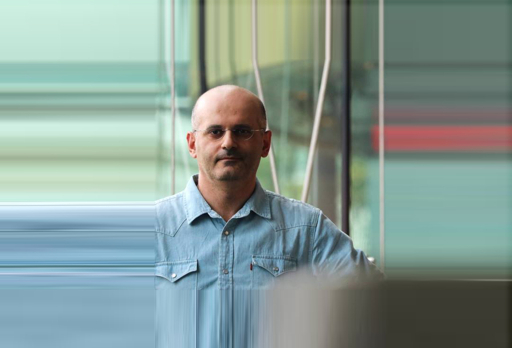
Senior Geneticist and first author of the Nature (2017) and Science (2022) Southern Arc genomic studies.

Professor of Archaeometry and Natural Sciences; co-author of the landmark 2022 Science Southern Arc study and director of the Kastrouli Mycenaean excavation.
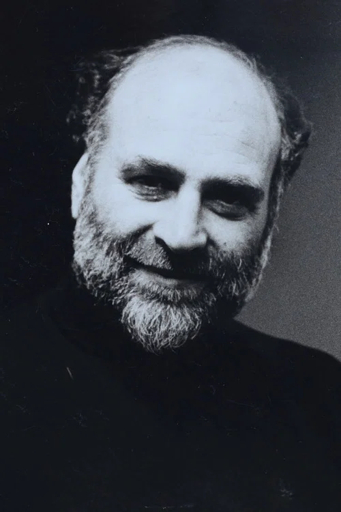
Renowned director (Agelastos Petra) analyzing the continuity of the human portrait and facial morphology across time.

World leader in ancient DNA sequencing.
(Subject to archival licensing rights clearance)
Sorbonne Chancellor Hélène Glykatzi-Ahrweiler (1926–2026): Curated archival insights addressing historical identity vs. Fallmerayer's claims.
Philosopher Christos Yannaras (1935–2024): Archival reflections on cultural ontology vs. racial determinism.
Aris Poulianos (1924–2021) Legacy Reels: Excerpts from the censored 1977 YENED documentary directed by Lila Kourkoulakou, alongside selected sequences from «Poulianos: The Aris of Men» (2010, produced by elixis/AEE) featuring late-career reflective interviews and excavation field diaries.
The Story: Following WWII and the Greek Civil War, young communist partisan Aris Poulianos escapes to Moscow, training in physical anthropology at Lomonosov University. Returning to the West in 1961, he is determined to counter the 19th-century Austrian theory of Fallmerayer, which claimed modern Greeks had zero connection to ancient populations. Armed with calipers, Poulianos measures 12,000 isolated mountain dwellers (Sarakatsani, Cretans, Maniates), arguing for morphological continuity.
Key Visuals: Declassified Soviet academic files, biometric demonstrations in alpine Balkan villages, rare historical field photographs.
The Story: In 1960, villagers in Halkidiki uncover a human cranium encrusted in stalagmitic calcite. Poulianos takes charge, classifies the fossil as Archanthropus europaeus petraloniensis, claims an age of 700,000 years, and asserts he uncovered Europe's earliest controlled fire, challenging the "Out of Africa" model. The Western scientific establishment pushes back: in 1981, Hennig et al. publish in Nature, dating the calcite to 160,000–240,000 years via ESR and U-series methods. Poulianos fires back with his own rebuttal in Nature in 1982 (Nature 299:280). The dispute leads to the Greek Ministry revoking his permits in 1983 and the state censoring a 1977 documentary directed by pioneering filmmaker Lila Kourkoulakou.
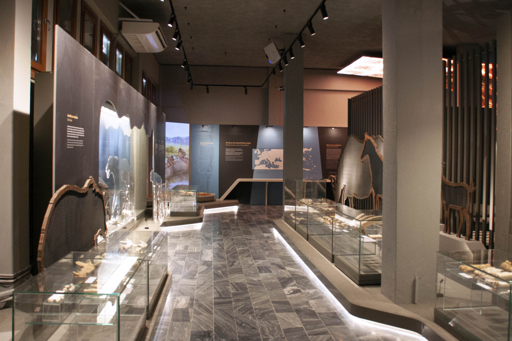
Key Visuals: First-look 4K footage of the newly renovated Petralona Cave, 3D anatomical deconstruction of the Petralona cranium, archival footage from the censored 1977 Kourkoulakou film and the 2010 retrospective documentary.

The Story: While Petralona remains mired in controversy, a sea cliff cavern in Mani delivers a genuine scientific breakthrough. Paleoanthropologist Prof. Katerina Harvati re-analyzes two fossil skulls discovered in the late 1970s. In 2019, Nature publishes her findings: while Apidima 2 is a 170,000-year-old Neanderthal, Apidima 1 is an anatomically modern Homo sapiens dated to 210,000 years ago — the earliest modern human ever found outside Africa. The episode explores the paradigm shift while examining healthy academic debates (such as counter-arguments raised by French researchers regarding archaic features), illustrating how science self-corrects.
Key Visuals: Precipitous coastal sea cliffs of Apidima (accessible only by boat), virtual high-resolution CT reconstructions at the University of Tübingen, comparative morphometrics with Morocco's Jebel Irhoud fossils.
The Story: The era of calipers yields to molecular paleogenomics. Prof. Konstantinos Triantafyllidis, Harvard geneticist Dr. Iosif Lazaridis, and archaeometry professor Dr. Ioannis Liritzis (University of the Aegean / Henan University) deconstruct the 2017 Nature paper on Minoans/Mycenaeans and the 2022 Science Southern Arc study (727 ancient genomes). Incorporating ancient DNA from the Late Mycenaean fortified settlement of Kastrouli near Delphi, the science reveals a dynamic Mediterranean tapestry: Anatolian farmers, Caucasus hunter-gatherers, and Steppe pastoralists. The data confirms substantial genetic continuity from Bronze Age populations to the present day, dismantling both 19th-century extinction theories and modern myths of biological isolation.
Key Visuals: Ancient DNA cleanrooms at Harvard Medical School and AUTH, active excavations at the Kastrouli Mycenaean settlement, dynamic 3D genomic flow maps across Eurasia.
The Story: The series reaches its cinematic and philosophical climax, tracing ancient genetic and cultural interactions far beyond the Aegean into Central Asia and the Tarim Basin. Archived insights from renowned Sorbonne Chancellor Hélène Glykatzi-Ahrweiler (from historic ERT/RIK broadcasts) examine how language and imperial culture transcended biology, alongside visual commentary from filmmaker Filippos Koutsaphtis on the enduring Mediterranean face. The series concludes at the reopened Petralona Cave, celebrating the site not as a symbol of regional isolation, but as a testament to humanity's shared, migratory journey.
Key Visuals: The Terracotta Army of Xian, sweeping aerial cinematography over the Aegean Sea, seamless visual morphing from ancient classical statues to contemporary human faces.
First-look 4K footage of the newly renovated cave and museum complex — Episode 2.
Precipitous coastal sea cliffs, accessible only by boat — Episode 3.
Active excavations at the Late Mycenaean fortified settlement — Episode 4.
Headquartered in Kavala (Northern Greece), Gullwing has a proven track record delivering premium non-fiction programming, investigative historical series, and science documentaries.
Gullwing productions have been licensed across four continents, working in partnership with major international distribution companies such as TVF International (London), securing placement on platforms including Amazon Prime Video and Apple TV.
Regular primary production partner for Greece's elite factual networks, including COSMOTE History - Magenta TV Greece and the public broadcaster ERT / ERTFLIX.
Situated within 90 minutes of Petralona Cave, Aristotle University's paleontology vaults, and key prehistoric sites across Macedonia and Thrace, guaranteeing rapid access and streamlined local operations.
Creative Greece 40% Cash Rebate (Law 5105/2024): The project qualifies for Greece's state incentive scheme administered by Creative Greece S.A., guaranteeing a 40% cash rebate on all eligible Greek expenditures, capped at €8M per production (with provisions up to €10M for strategic projects).
Co-Production Treaties: Fully compliant with European Convention on Cinematographic Co-Production standards, enabling international partners to stack national incentives (e.g., CNC in France, FFA/DFFF in Germany, Eurimages).
Broadcaster Participation Models:
1. Full Commission: Turnkey production service delivery for a primary global network or streamer.
2. Co-Financing / Co-Production Partnership: Split territorial rights (Greece/Cyprus retained by Gullwing, international territories licensed to co-producing broadcasters).
3. Pre-Sales & Distribution Guarantees: Multi-territory licensing windows available via sales representation.
"...nor to forgotten archives. It belongs to science, to the world screen, and to our shared human journey. Join us in uncovering it."
Contact Us